

Domestic abuse in later life – resources to help professional understanding
Under-recognised and underreported
Domestic abuse can affect anyone, at any age, yet research shows that abuse among older people is frequently under-recognised and underreported.
Coercive control is often a feature in older people experiencing abuse from an intimate partner but also occurs in abuse from adult family members. Generational attitudes can make it difficult for older adults to identify or acknowledge abuse. An older person may have endured decades of coercive control in their relationship, impacting their self-identity and confidence.
Many older victims may believe that domestic abuse services are for younger people or those experiencing physical violence. This misconception can prevent them from accessing help, especially if they’re dealing with non-physical forms of abuse, like emotional or financial control.
An additional complexity can include the co-existence of domestic abuse and dementia and where there is care need within the relationship.
Technology Facilitated Abuse
It is important to recognise that domestic abuse in later life can include technology-facilitated control, with perpetrators, who may be partners, adult children or other family members, using digital tools to monitor, isolate and restrict independence.
As more older people rely on technology for banking, communication and daily life, this can increase vulnerability. Professionals should remain curious and alert to who is managing accounts, devices and access, checking for issues such as passwords set by others, unknown financial products, or restricted communications. Technology abuse is often intertwined with other forms of harm, so asking simple, clear questions about digital use, consent and boundaries can help identify risks.
The Refuge Tech Safety “Smart Home” resource can support practitioners to understand risks linked to home technology and guide safer conversations with those affected.
Resources, training and further learning
A range of resources and training are available to support those working with older people, including the Hidden Harms animation (in partnership with Essex, Thurrock and Southend Adult Safeguarding Boards, Compass and SETDAB). This animation helps to identify abusive behaviours by intimate partners or family members, emphasising that abuse isn’t always physical. It may build gradually over time and can happen at any stage of life. Co-created with survivors aged 60-93 from Dewis Choice, the animation offers real-life insights from those who have recovered and are living free from abuse. The Hidden Harms animation is now also available in British Sign Language.
Dementia & Domestic Abuse Toolkit
Additionally, Dewis Choice have relaunched their Dementia & Domestic Abuse Toolkit. The toolkit aims to address gaps in practitioners’ knowledge on the co-existence of domestic abuse and dementia.
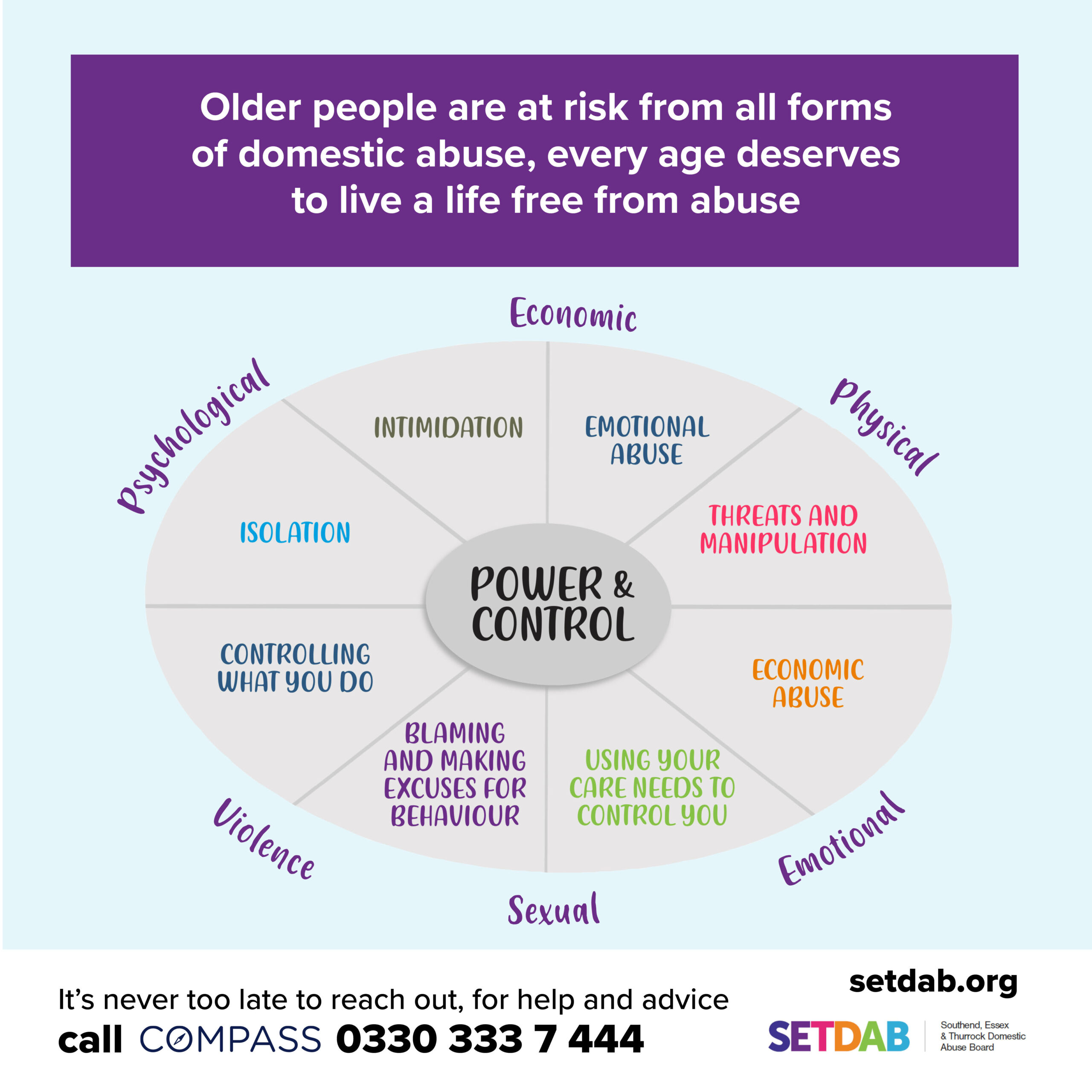
View the adapted Power and Control Wheel based on the lived experiences of over 90 older victim-survivors supported to help you recognise and understand abusive behaviours.
For further learning, the FREE SETDAB e-learning package on domestic abuse and older people is available. This comprehensive course covers key areas such as understanding abuse in older adults, safeguarding, rights and entitlements, and pathways to support victims and perpetrators across Essex.
Raising awareness
The SETDAB ‘It’s Never Too Late’ campaign is aimed at raising awareness about domestic abuse, particularly among older adults. The campaign emphasises that it is never too late for older victims of domestic abuse to seek help, regardless of how long the abuse has been going on.
Available to download are free resources to raise awareness including social media content and printable posters.
You are not alone, there is help and support for you.
If you, or an adult you know is at risk then please contact Compass on 0330 333 7 444 (8.00am to 8.00pm weekdays, 8.00am to 1pm weekends) for help and support.
Talking to someone will not mean having to make decisions you are not ready for, but it will create options to help you get the support you need to feel safer and happier.
If you or someone you know is in immediate danger, please call 999